
Indian benchmark indices, Sensex and Nifty, traded marginally higher in early trade despite the US Federal Reserve's recent rate hike and indications of further tightening, with the National Stock Exchange's much-anticipated Rs 22,569-crore IPO also opening for subscription.

Indian benchmark equity indices, Sensex and Nifty, closed mixed on Friday. While a drop in crude oil prices offered some relief, weakness in IT stocks and several Tata Group counters, including a significant dip in Tata Chemicals and ongoing boardroom issues at Tata Sons, limited a broader market recovery.
Indian benchmark indices, Sensex and Nifty, experienced declines in early trading, primarily due to selling pressure on blue-chip HDFC Bank and ongoing geopolitical uncertainties.

Indian benchmark indices Sensex and Nifty opened higher, extending gains from the previous session, driven by a rally in global markets and a slight cooling in crude oil prices. Optimism around a potential meeting between US and Iranian presidents also contributed to positive sentiment.Later both indices pared gains and were trading in red. Track Sensex, Nifty on September 22.
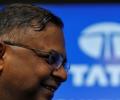
The Tata Sons board has voted to reappoint N Chandrasekaran as chairman for a third five-year term, a decision influenced by the Reserve Bank of India's rejection of the company's application to surrender its NBFC registration, which revives the prospect of a stock market listing.

Analysts predict that the Indian stock market's sentiment this week will be primarily influenced by the domestic GDP data announcement, crude oil prices, and the crucial US non-farm payrolls report.
The benchmark BSE Sensex rebounded by 362 points, ending a four-day losing streak, driven by strong buying in metal, private banking, and oil and gas shares, while the broader NSE Nifty saw modest gains despite paring some advances in the closing session.

Foreign portfolio investors (FPIs) significantly increased their buying in Indian equities during the first half of August, with financial services attracting the largest inflows, reversing previous outflows. The IT sector also continued to see strong interest from overseas investors, driven by a reassessment of valuations and the role of Indian IT firms in AI deployment.

India's Chief Economic Advisor V Anantha Nageswaran stated that the country's balance of payments (BoP) pressure is expected to remain a continuous challenge due to rising imports, commodity dependence, high global interest rates, and intense competition for capital.
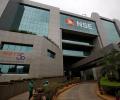
The National Stock Exchange (NSE) has set its initial public offering (IPO) price band at Rs 1,700-1,785 per equity share, with the subscription period running from September 17 to September 21, aiming to raise up to Rs 22,569 crore.

Jio Platforms Ltd, the digital services arm of Reliance Industries, has secured Sebi's final observation to launch an initial public offering (IPO) aiming to raise approximately USD 4 billion (Rs 37,700 crore), potentially making it the largest IPO in India's history.

'Regulations give a particular minimum amount of shares to be given in the OFS or IPO -- without which one cannot do the IPO.' 'We got that number on the day of filing of updated DRHP -- sufficient for us to go live with the IPO.'

'India is vulnerable to the West Asia crisis in three ways: Energy costs, the business Indian companies conduct in the region, and remittances from the Indian diaspora.'

Indian stock markets, including the Sensex and Nifty, experienced a significant tumble in early trade, driven by escalating tensions in West Asia that pushed crude oil prices close to the USD 100-per-barrel mark, alongside selling in IT stocks and fresh foreign fund outflows.

Indian benchmark equity indices, Sensex and Nifty, rebounded in early trade after a three-day slide, driven by strong buying in blue-chip bank stocks and a firm trend in global markets, supported by easing US bond yields and record foreign-currency deposit inflows.

Listing, according to Noel Tata, will fundamentally change how the company and the group have been working over the past 150 years.

Net inflows into smallcap funds surged 39 per cent M-o-M to a record Rs 7,768 crore, while midcap fund inflows rose marginally to Rs 6,192 crore.

'Every period of excessive optimism eventually gives way to a correction, while periods of extreme pessimism often create the best investment opportunities.'
Indian benchmark equity indices, Sensex and Nifty, opened higher on Monday, driven by strong buying in blue-chip stocks like HDFC Bank and Infosys, despite persistent geopolitical tensions and elevated crude oil prices.

India is strategically positioned to develop a robust domestic semiconductor ecosystem, driven by increasing electronics consumption, strong government support through incentives, and a global shift in supply chains. Boston Consulting Group Managing Director Ankush Wadhera highlights India's potential as a safe haven for investments, with the AI boom further fuelling demand for advanced chips. The nation aims to expand its capabilities across the entire semiconductor value chain, attracting significant global and domestic investments.
Indian benchmark equity indices, Sensex and Nifty, experienced declines in early trade due to renewed tensions in West Asia, which led to a rebound in crude oil prices, coupled with weak global market trends and foreign fund outflows.

Smallcap funds have emerged as the primary beneficiaries of the systematic investment plan (SIP) wave in Indian mutual funds over the past five years, with their SIP assets surging to approximately 1.83 trillion by March 2026, a fivefold increase.

Used-car financing has seen significant growth, but borrowers must be aware of higher interest rates, conservative loan-to-value ratios, shorter tenures, and the risk of owing more than the car's depreciated value. Understanding these factors is crucial for making informed decisions.

'Ultimately, banks are a channel for people to get some long-term return, and this means banks need to adjust their asset-liability mismatch.' 'Customers also need long-term deposits, say those of three-five years. How would they get them if returns on those deposits do not climb?' 'Otherwise, on fixed deposits, a senior citizen doesn't get anything.'

The National Stock Exchange's (NSE) initial public offering (IPO) is expected to shrink in size to Rs 25,000-27,000 crore, down from an earlier estimate of Rs 30,000 crore, as some shareholders are reducing their offer for sale (OFS) stake.
Indian benchmark equity indices, Sensex and Nifty, closed lower due to persistent geopolitical tensions in the Middle East and elevated crude oil prices, with investors remaining cautious ahead of fresh US sanctions on Iran.
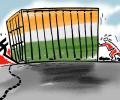
The United States and the European Union have strongly criticised India's trade policies at the World Trade Organization review, highlighting concerns over high tariffs, quality-control orders (QCOs), and restrictions on digital trade and services, which they argue undermine India's economic openness.
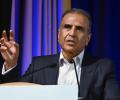
Bharti Airtel is strategically shifting its focus towards data centres, cloud services, and financial services as key drivers for its next phase of growth, leveraging significant past investments in digital infrastructure, as outlined by Chairman Sunil Mittal in the company's Annual Report for 2025-26.

Indian information technology (IT) stocks, led by Infosys, experienced a significant selloff, dragging the Nifty to a two-month low, primarily due to escalating West Asian tensions pushing crude oil prices higher, and concerns over upcoming large IPOs diverting funds from secondary markets. The sector is also grappling with the long-term implications of AI disruption.

Augmont Enterprises Ltd, an integrated gold and silver platform, saw its shares list with a premium of nearly 22 per cent against the issue price of Rs 788 on its market debut.

Gen Z is a generation that has been raised in a digital-first era, where shopping, payment, and monetary transactions are done within seconds via smartphones. Moreover, the new flexibility offered by investing platforms is encouraging young investors to opt for investment frequencies that align with their spending patterns and lifestyle. This change has brought up an interesting debate on whether daily and weekly SIPs are better than monthly investments.

Newly listed companies Vedanta Aluminium Metal, SBI Funds Management and Manipal Health Enterprises have entered the Rs 1 trillion mcap list since March 2026.
Indian benchmark equity indices, Sensex and Nifty, rebounded after a two-day losing streak, driven by strong buying in blue-chip IT stocks and positive global market cues, with the Sensex climbing 330.92 points.

Indian benchmark equity indices, Sensex and Nifty, rebounded in early trade after two days of losses, driven by strong buying in blue-chip IT stocks and a rally in global markets.

'The changes in its leadership team will help address the scepticism that has engulfed the bank over the recent period.'

Analysts predict that crude oil prices and the ongoing US-Iran conflict will be the primary drivers of stock market movements, with investors also closely watching the Jackson Hole symposium for cues on interest rates.

Do not share OTPs, PINs, authentication codes, card numbers, card verification values (CVVs), KYC details, security answers, Internet-banking passwords or Aadhaar-based authentication credentials through SMS, e-mail or phone calls.

The initial public offering (IPO) of e-commerce enablement platform Shiprocket Ltd was subscribed an impressive 99.38 times on its final day of bidding, attracting bids for over 9.38 billion shares against 94.43 million on offer.

Indian benchmark indices, Sensex and Nifty, continued their downward trend for the fifth consecutive day, with the Sensex dropping 281 points and Nifty falling 78 points, primarily driven by surging crude oil prices and persistent geopolitical tensions in West Asia.

'We have a very demanding electorate which expects us to do something. So we will have to do something which is a bit out of the ordinary while at the same time keeping in mind the risk factors.'
